

What Sardar Vallabhbhai Patel’s Birth Anniversary Means Today!
By SUDARSHAN CHHOTORAY
Sardar Patel was instrumental in merger of 26 princely States of Odisha in Indian Union.
Despite stiff resistance from erstwhile Kings, Queens and Landlords, Patel along with Former Odisha Chief Minister then Governor of Maharashtra Dr Harekrushna Mahtab and his close confident VP Menon had undertaken the mammoth task of merger of then princely states run by various Kingdoms.
It was due to the strong leadetship of Patel, Kings bowed down and had signed tge agreement.
What we witness today and proud of is an United State of Odisha with erstwhile princely States are part of.
After India gained Independence from Britishers in 1947, it was almost a double whammy -Keeping the Country united, adressing poverty and emerging economic challenges and administraing the whole Indian Subcontinent, there came in merger of 560princely States including 26 of Odisha.
It was Patel who turned the tide on December 24, 1947 meeting in Cuttack called by Mahtab and successfully persuaded all Kings, which was next to impossible in motivating them.
While remembering the contributions of Patel Chief Minister Mohan Charan Majhi on Friday led the Unity Run near the Kalinga Stadium Road in Bhubaneswar and lauded how Patel had merged all princely States, for which we are proud of celebrating a united India today.
State’s Home, Cultural and Sports departments have chalked out an fortnightly long details programmee separately to remember Patel and his work..
Odisha Information Service Officer Suspended For Poll Code Violation
Nitish’s 26-Second Silence At NDA Manifesto Launch Triggers Congress Jibe
17 From Odisha Police Conferred With Kendriya Grihmantri Dakshata Padak 2025
Rs 2 Crore Unpaid Dues Trigger Mumbai Hostage Drama: Here’s A Blow-Blow Account Of Incident
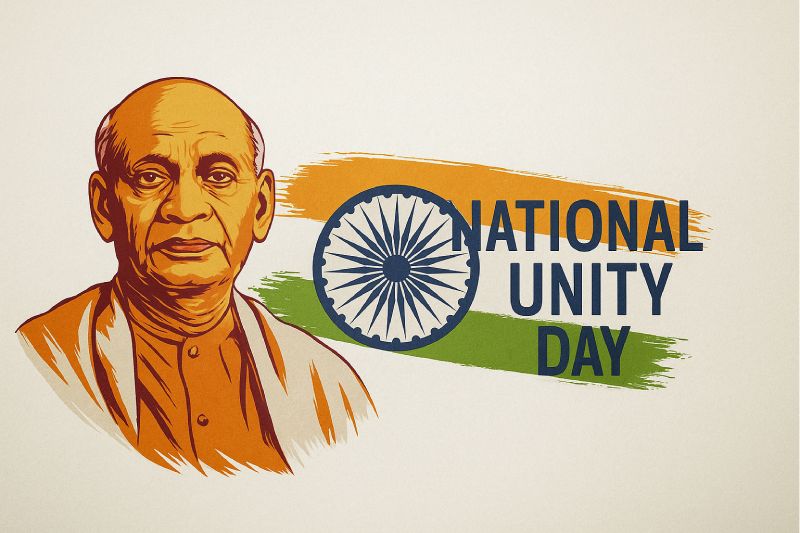
As the birth anniversary of Sardhar Vallav Bhai Patel on October 31 being observed as the National Unity Day, the celebration honors India’s “Iron Man” and his monumental contributions to the nation.
The day, also known as Rashtriya Ekta Diwas, celebrates Patel’s extraordinary vision that shaped our nation’s unity during a pivotal moment in history.
Sardar Vallabhbhai Patel’s legacy continues to shape modern India. His role as India’s first Deputy Prime Minister and Home Minister led to an unprecedented achievement the integration of more than 560 princely states into a unified India after independence. His diplomatic skills and steadfast dedication created the geographical foundation of today’s India.
The government plans to honor Sardar Vallabhbhai Patel’s 150th birth anniversary through a nationwide program from 2024 to 2026. His message of “Ek Bharat, Shreshtha Bharat” resonates deeply in contemporary India as we direct our path through unity amid diversity. The world’s tallest statue, the Statue of Unity in Kevadia, Gujarat stands as a testament to Patel’s enduring influence on our nation’s history.
Sardar Vallabhbhai Patel:
The Man Behind the Vision
Vallabhbhai Patel’s transformation from a small-town lawyer to India’s “Iron Man“
shows his remarkable character. He was born in Nadiad, Gujarat on October 31, 1875, to a modest agricultural family. Young Vallabhbhai’s early education in Nadiad, Petlad, and Borsad shaped his stoic demeanor that became his leadership trademark.
Patel’s ambitions remained strong even though he matriculated at age 22. He established himself as a country lawyer and saved money diligently. His determination led him to England in 1910 to study at the Middle Temple. He completed his law course in two years instead of three and won a prize in Roman Law.
Patel returned to India in 1913 and built a successful legal practice in Ahmedabad. His life changed dramatically after meeting Mahatma Gandhi at the Gujarat Political Conference in Godhra in 1917. This meeting transformed his path completely. He gave up his European clothes and adopted the simple white khadi worn by Indian peasants.
The Kheda Satyagraha of 1918 marked his deeper involvement in politics. He worked as Gandhi’s deputy and organized farmers against unfair taxation. His leadership skills shone brightly during the 1928 Bardoli Satyagraha, earning him the title “Sardar” (leader). This achievement secured his position in India’s freedom struggle and laid the foundation for his crucial role in national integration.
His Role in Building a United India
Sardar Patel took on his biggest challenge
as India’s first Deputy Prime Minister and Home Minister after independence in 1947. He successfully united over 565 princely states into the Indian Union, which earned him the title “Iron Man of India”.
Patel’s diplomatic approach worked well. He promised the princely states benefits like privy purses and protection under India’s new government. When diplomacy didn’t work as in Junagadh and Hyderabad – he didn’t think twice about using military force. The Nawab of Junagadh wanted to join Pakistan, but Patel’s quick action brought it into India. The same happened with Hyderabad’s Nizam, who gave in after Operation Polo in 1948.
Patel’s work went beyond uniting territories. He helped partition refugees
who fled to Punjab and Delhi. He also created the modern All India Services system, which he called India’s ‘steel frame’. This made him known as the “patron saint of India’s civil servants“.
Patel managed to achieve this massive change without bloodshed. He told the Constituent Assembly that the new Constitution showed “not an alliance between democracies and dynasties, but a real Union of the Indian people”. We still honor his dream of a unified administration and territorial integrity on his birth anniversary, October 31st, now National Unity Day.
National Unity Day:
India celebrates National Unity Day
(Rashtriya Ekta Diwas) on October 31st since 2014. This date marks Sardar Vallabhbhai Patel’s birth anniversary with nationwide reverence. Citizens get a chance to reaffirm India’s inherent strength and resilience against threats to unity and security.
The “Run for Unity” serves as the life-blood of these celebrations across Indian cities. People from all walks of life come together to run distances between 3-10 kilometers. Participants pledge themselves to preserve national unity, integrity, and security.The government created the prestigious Sardar Patel National Unity Award in 2019. The President confers this highest civilian honor among other Padma awards to recognize outstanding contributions toward promoting national unity.
Sardar Vallabhbhai Patel’s 150th birth anniversary will see a two-year nationwide celebration from 2024-2026. The “Sardar@150 Unity March” will cover 152 km from Patel’s birthplace in Karamsad to the Statue of Unity in Kevadia. Youth will participate through NSS, NCC, and MY Bharat platforms, showing how Patel’s vision of “Ek Bharat, Shreshtha Bharat” inspires new generations.
Conclusion:
Sardar Vallabhbhai Patel’s legacy shows how visionary leadership can achieve great things in extraordinary times. His diplomatic brilliance turned a scattered collection of princely states into one united India through persuasion, strategic thinking, and firm action when needed. This remarkable feat continues to shape our national identity today, seven decades after his work.
National Unity Day is more than just a ceremonial event. It gives us a chance to think about the values Patel lived by – unity, integrity, and steadfast dedication to building our nation. The “Run for Unity” events bring people together from all walks of life, showing his spirit lives on through a shared purpose.
The 150th birth anniversary celebrations (2024-2026) will spread Patel’s lasting message to new generations. Young Indians will connect with his amazing story through the planned “Sardar@150 Unity March” from his birthplace to the Statue of Unity. They’ll learn how a small-
town lawyer became the architect of modern India.
The massive Statue of Unity in Kevadia is more than a tourist spot – it reminds us of Patel’s huge impact on our nation’s path. His dream of “Ek Bharat, Shreshtha Bharat” stays just as important now as we tackle today’s challenges to our unity.We should keep drawing strength from the Iron Man’s legacy.
Sardar Patel proved that our differences don’t have to divide us, that dialog can build bridges, and that a united nation can face any challenge. His birth anniversary helps us look back at our history and guides us toward our future as one nation
