
A Journey of Odia Cinema, Culture and Identity
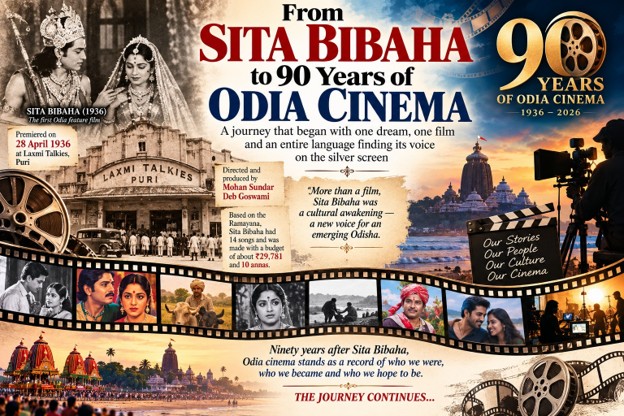
Odia cinema has completed a remarkable journey of 90 years. It is a journey that began with one film and gradually grew into a rich world of stories, music, culture and social messages. The story of Odia cinema began with Sita Bibaha in 1936, a film that opened a new chapter in the cultural history of Odisha.
Sita Bibaha was the first Odia feature film. It premiered on 28 April 1936 at Laxmi Talkies in Puri. Directed and produced by Mohan Sundar Deb Goswami, the film was based on the Ramayana and presented the story of the marriage of Sita and Rama. The film reportedly had 14 songs and was made with a budget of about Rs. 29,781 and 10 annas.
At a time when cinema was still a new form of entertainment in India, making a film in Odia was a major achievement. Sita Bibaha gave the Odia language a voice on the silver screen and showed that the stories, traditions and imagination of Odisha could also become part of the growing world of Indian cinema.
Over the decades, Odia cinema developed through many stages. Filmmakers explored subjects connected with family, society, village life, history, literature, relationships and the changing aspirations of ordinary people. Odia films also helped preserve local traditions, music, language and cultural values for new generations.
The journey was not always easy. The industry faced financial difficulties, limited production facilities, changing audience tastes and strong competition from larger film industries. Yet filmmakers, actors, musicians, technicians and audiences continued to keep Odia cinema alive.
Cinema in Odisha is more than entertainment. It is also a record of the society in which it is created. Films have reflected the hopes, struggles, humour, emotions and dreams of the people of the state. They have also helped carry Odia culture beyond the boundaries of Odisha.
As Odia cinema marks 90 years from 1936 to 2026, Sita Bibaha remains an important starting point in this long story. From the early days of black-and-white filmmaking to today’s digital cameras, modern production techniques and new platforms, the medium has changed dramatically. But the basic purpose remains the same: to tell stories that connect with people.
Ninety years after Sita Bibaha, Odia cinema stands as a record of where we came from, who we became and what we hope to be. The next chapter belongs to a new generation of filmmakers, actors, writers, musicians and technicians who can take Odia cinema towards an even wider audience while keeping its cultural identity alive.
The journey that began with Sita Bibaha in 1936 continues in 2026. Ninety years of Odia cinema is not simply a celebration of films. It is a celebration of Odisha’s language, people, culture and imagination.
Sita Bibaha (1936) to 90 Years of Odia Cinema (1936–2026)