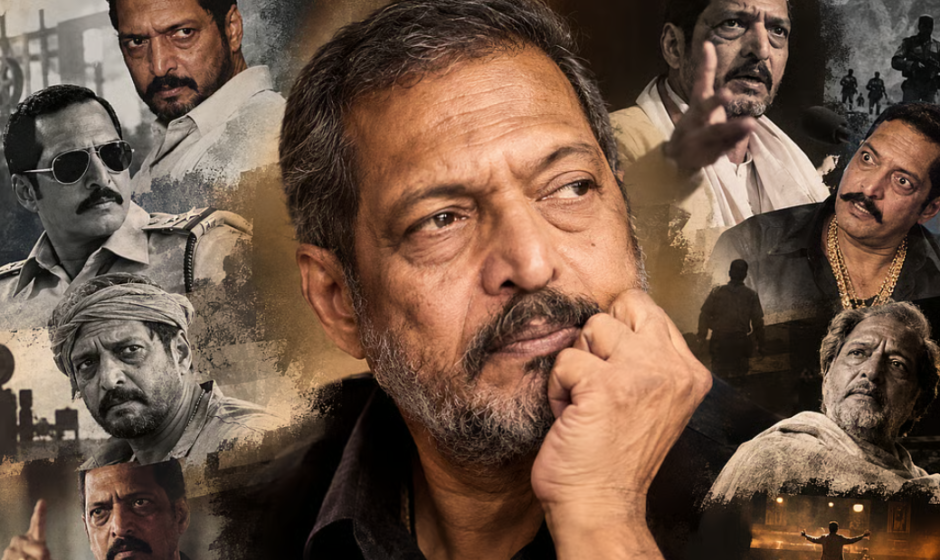

Indian cinema is mourning the loss of Nana Patekar, one of its most distinctive and uncompromising performers. The veteran actor died on 8 October 2026, aged 75, according to reports confirmed by his family and hospital sources. His passing closes a remarkable chapter in Hindi and Marathi cinema, but the characters he brought to life, the force of his voice and the emotional honesty of his performances will continue to reach audiences across generations.
An Actor Who Never Needed Glamour to Command Attention
Nana Patekar, born Vishwanath Patekar, built a career on intensity, precision and an unmistakable screen presence. He could communicate anger with a glance, vulnerability through silence and authority without raising his voice. Rather than relying on conventional glamour, he made the inner life of a character the centre of his performance.
His filmography includes memorable work in Parinda, Krantiveer, Agni Sakshi, Prahaar: The Final Attack, Ab Tak Chhappan, Welcome and the Marathi film Natsamrat. As Anna in Parinda, he created a chilling portrait of a volatile underworld figure. In Krantiveer, he delivered a performance charged with anger at injustice. In Natsamrat, he portrayed an ageing theatre artist confronting loneliness, pride and loss. As Uday Shetty in Welcome, he revealed a different side of his talent through deadpan humour and impeccable comic timing.
His achievements include three National Film Awards: Best Supporting Actor for Parinda, Best Actor for Krantiveer and Best Supporting Actor for Agni Sakshi. He received the Padma Shri in 2013 for his contribution to the arts. These honours recognised a performer whose work consistently resisted easy categorisation.
Kargil: When an Actor Wanted to Stand Beside Soldiers
One of the most striking parts of Patekar’s life unfolded away from film sets. During the 1999 Kargil conflict, he sought permission from then Defence Minister George Fernandes to go to the front and be with Indian Army personnel. In a later interview, Patekar said he spent around 60 days with the troops and became part of a Quick Reaction Team (QRT). He did not disclose operational details of what he did there.
His connection with military life had developed during the making of Prahaar: The Final Attack, the 1991 film he directed and starred in as an Army officer. He underwent intensive training with the Maratha Light Infantry for the role. His later account of his time with soldiers during Kargil showed that his respect for the armed forces extended beyond the screen. It is important, however, to describe this accurately: he spoke of joining and staying with Army personnel, not of being a formally enlisted soldier.
Patekar described his presence there as a modest contribution he could make for the country. The story added a meaningful dimension to his public image, connecting the discipline he explored in cinema with the real-life courage and hardship of military personnel.
A Voice, a Pause, a Line That Stayed With You
Patekar’s dialogue delivery was one of his signatures. He did not simply speak a line; he gave it rhythm, tension and emotional weight. His forceful speeches in Krantiveer made audiences confront themes of corruption, justice and civic responsibility. In Prahaar, the tension between discipline, violence and duty shaped the character’s moral world. His performances often made even a brief exchange feel charged with consequence.
His gift was not limited to fiery monologues. In Welcome, a pause or a deadpan reaction could trigger laughter; in Natsamrat, extended theatrical passages exposed the fragility beneath a proud exterior. The contrast between these performances captures his range: he could be intimidating, wounded, funny or deeply moving without losing his distinctive identity.
A line associated with his account of Kargil also reflected his understated view of service: “Itna sa toh kuch hum kar sakte hain desh ke liye” (“At least this little bit we can do for the country”). The sentiment is memorable not because it sounds grand, but because it expresses service as a responsibility rather than a performance.
A Legacy That Transcends Generations
Patekar’s appeal now crosses generations. Many older viewers remember his intense dramatic roles; millennials grew up with films such as Krantiveer and Welcome; younger audiences continue to discover his work through streaming services, clips and online conversations. His performances remain shareable because they are built around strong characters and recognisable human conflicts, not merely the fashions of a particular era.
He showed that an actor could move between serious drama, crime stories, social commentary, Marathi theatre and comedy without being confined to one image. In an industry often shaped by celebrity culture and changing trends, his career offered a reminder that craft, conviction and a willingness to take risks can create a lasting identity.
Beyond Cinema: A Commitment to People
Patekar’s public life also included social work. Alongside fellow actor Makarand Anaspure, he helped establish the Naam Foundation, which has supported drought-affected farmers and rural communities in Maharashtra. This work extended his influence beyond entertainment and brought attention to people facing difficult circumstances.
His journey was not simply a story of fame. It reflected years of work in theatre and film, a distinctive artistic temperament and an interest in causes beyond the screen. His legacy therefore includes not only memorable roles, but also the example of using public recognition to draw attention to human hardship.
The Final Curtain, Not the Final Word
Nana Patekar’s death is a moment of reflection for Indian cinema. His films will continue to challenge, entertain and move audiences. His career demonstrated that cinema can expose injustice, explore vulnerability and make people laugh, sometimes through the same performer.
India has lost a diamond star, but the brilliance of his work remains. Anna in Parinda, Pratap Narayan Tilak in Krantiveer, Uday Shetty in Welcome and Ganpatrao Belwalkar in Natsamrat will continue to introduce new generations to his remarkable range. The man has taken his final bow, but the actor’s legacy will remain on the stage of Indian cinema.
A final salute to Nana Patekar: a fearless performer whose work continues to connect generations.