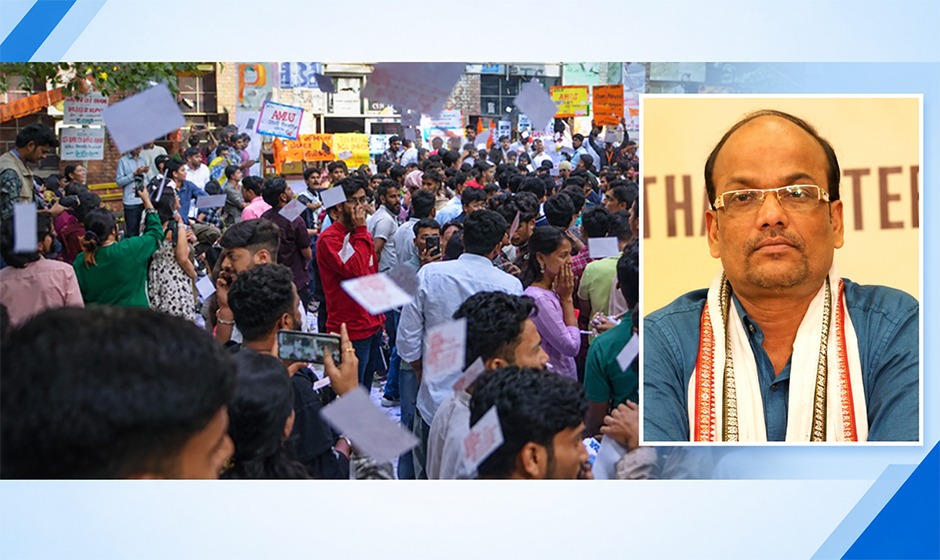

As Odisha Prepares for Student Elections, a New Generation Faces an Old Question: Is Politics About Power or Purpose?
BY SUDARSHAN CHHOTORAY
THE CAMPUS AS A DEMOCRATIC BEGINNING
A college campus is often remembered for its classrooms, friendships, examinations and dreams of a better future. But there is another side to campus life: the place where young minds first encounter power, disagreement, public responsibility and the difficult art of leadership. With student union elections scheduled to return in Odisha on 15 October 2026, after an eight-year gap, the campus is preparing to become a stage for a larger democratic conversation.
For today’s Gen Z, the election is not merely about choosing a president, secretary or other student representatives. It is about deciding what kind of leadership deserves their trust. In an age when a message can travel across hundreds of phones within seconds, a candidate can become popular overnight. Yet popularity and leadership are not the same. A viral speech may attract attention, but solving a student’s problem requires patience, persistence and the courage to face uncomfortable questions.
BEYOND SLOGANS AND SOCIAL MEDIA
The concerns of students are immediate and deeply personal. They want better classrooms, functional laboratories, well-stocked libraries, safe campuses, transparent administration and meaningful opportunities after graduation. They also want to know whether their voices matter when decisions affecting their education are made. These are not extravagant demands. They are fundamental expectations from institutions entrusted with preparing young people for the future.
Politics inevitably enters this conversation. Student organisations associated with major political parties have an interest in campus elections, and the contest can become a training ground for future political workers. However, the official rules prohibit direct political-party involvement in the elections. That distinction matters. Student representation should not be reduced to a contest between larger political forces, nor should a college become an arena for hostility imported from outside its gates. The purpose of campus democracy is to represent students, not to turn them into instruments of somebody else’s ambitions.
THE VOTER’S RESPONSIBILITY
Gen Z also faces a challenge of its own. Being politically aware is not simply about expressing anger online, supporting a popular personality or sharing a powerful slogan. It means examining facts, listening to opposing views and judging promises against practical possibilities. A responsible voter asks what a candidate plans to do, how the proposal can be implemented and who will be held accountable if nothing changes. Democracy becomes stronger when questions are welcomed rather than silenced.
Equally, a candidate’s character is revealed not only during a campaign but also in moments of defeat. Can the winner listen to criticism? Can the loser accept the result peacefully? Can rivals work together when a common student concern demands cooperation? These questions may appear ordinary, but they separate meaningful representation from the pursuit of power for its own sake.
A VICTORY MEASURED AFTER ELECTION DAY
Odisha’s campus elections therefore deserve attention beyond the excitement of campaign speeches and counting day. They offer an opportunity to renew student participation and encourage a generation to connect its aspirations with public responsibility. The outcome should ultimately be measured not by the number of posters displayed or slogans shouted, but by the problems addressed, the trust earned and the improvements achieved.
A college election may last only a day, but its lessons can remain for years. The campus is not the whole of democracy, yet it can be where democratic habits begin. When students learn to choose thoughtfully, disagree peacefully and demand accountability, they carry those values beyond the college gates.
“The real victory will not belong simply to the candidate who wins the election. It will belong to the student community if, after the votes are counted, its voice becomes stronger and its campus becomes better.”